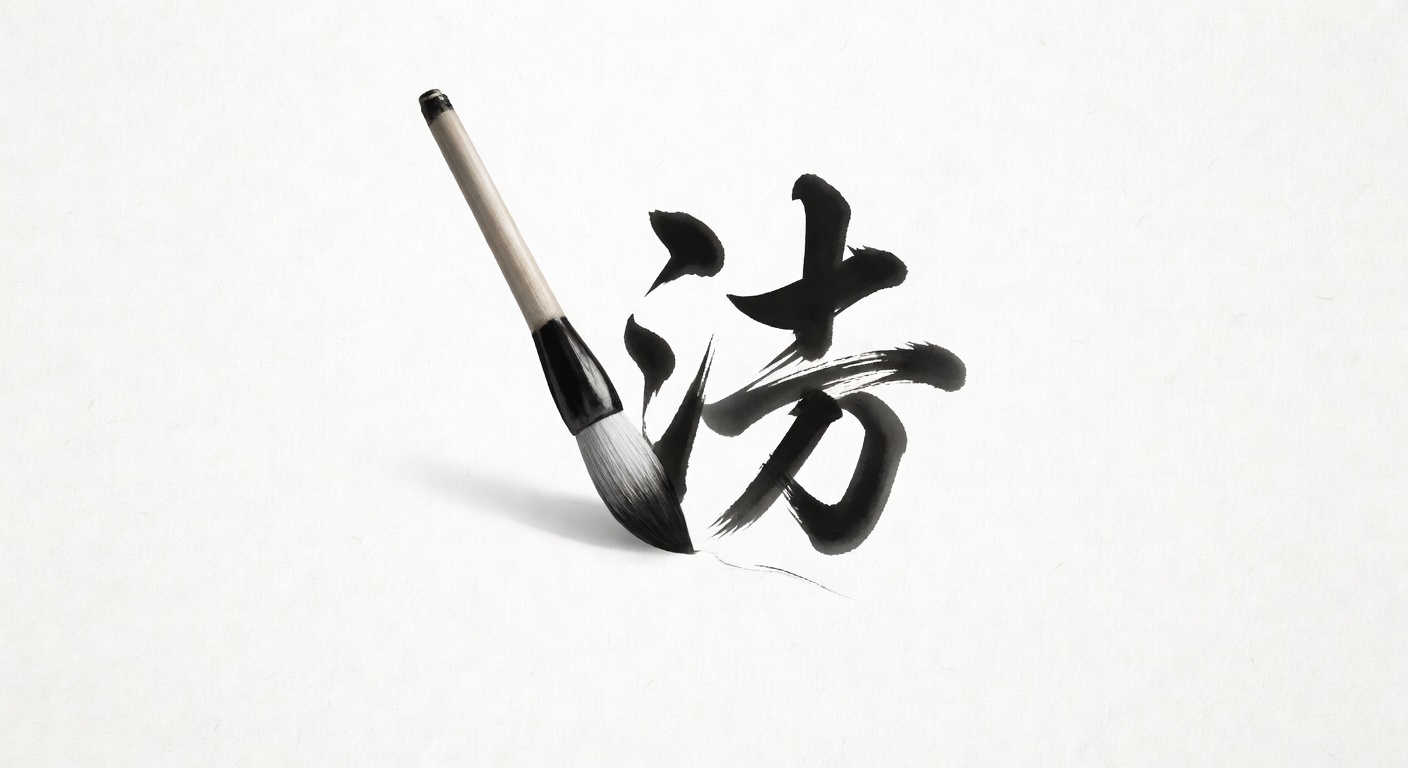
Each stroke of the brush in shodō (書道) is a meeting point between the artist's inner world and the world as it is. More than an act of writing, Japanese calligraphy is a practice of attention — of presence — refined over more than a thousand years.
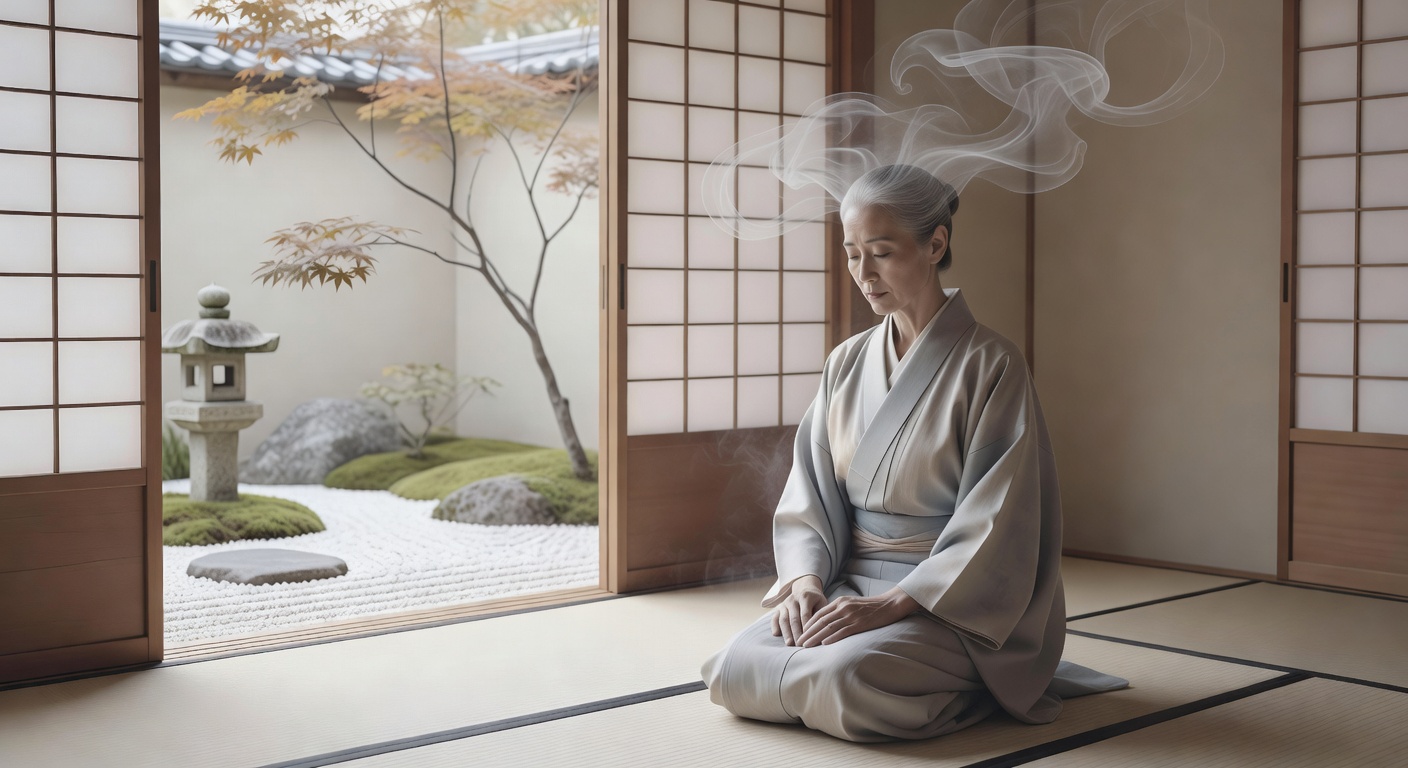
In the courtyard of a temple in Kyoto, an elderly shodō master prepares his ink stone. His movements are unhurried. The grinding of the ink block against the stone produces a faint, familiar fragrance — pine soot and hide glue, a scent that has accompanied this ritual for centuries. Before a single brushstroke is laid on paper, the practice of calligraphy has already begun.
Japanese calligraphy arrived from China during the Nara period (710–794 CE), brought by Buddhist monks alongside sutras and scholarly texts. Over the centuries, it developed its own distinct character, adapting to the phonetic writing systems of hiragana and katakana while retaining the expressive depth of kanji.
The Way of the Brush
The word shodō itself is telling: sho (書) means writing; dō (道) means path or way. Like other Japanese arts ending in -dō — kendō, judō, chadō — calligraphy is understood not merely as a skill but as a discipline of the whole person. To practise shodō is to cultivate patience, self-awareness, and a refined sensitivity to the present moment.
The brush does not lie. It captures not only the form of the character but the character of the person who wrote it.
— Attributed to Kūkai (空海), founder of Shingon Buddhism, 9th century
Traditional calligraphy employs the "shitsu hitsu boku ken" — the four treasures: the brush (fude), ink (sumi), ink stone (suzuri), and paper (washi). Each element has its own culture of craft. Washi paper alone encompasses hundreds of varieties, from the gossamer-thin gampi to the robust kozo — each responding differently to the brush's pressure and speed.
Traditional textile patterns echo the visual vocabulary of calligraphy — rhythm, repetition, and the beauty of controlled variation.
Script Styles and Their Temperaments
Japanese calligraphers work across several major script styles, each with its own visual energy and historical roots:
Kaisho (楷書) — The standard block script, clean and legible. It is the script most commonly taught to beginners and is characterised by precise, distinct strokes. There is no ambiguity in kaisho; it is honest and structural.
Gyōsho (行書) — The "running" script, where strokes begin to flow into one another. It suggests movement without fully abandoning form — the script of everyday elegance.
Sōsho (草書) — The "grass" script, highly cursive and expressive. Strokes blur and merge; the character becomes suggestion rather than statement. Sōsho requires deep familiarity — both to write and to read.
The Contemporary Calligrapher
Today, shodō occupies a fascinating dual position in Japanese culture. On one hand, it remains a formal discipline taught in schools, practised in temples, and celebrated at national competitions. On the other, contemporary calligraphers are pushing its boundaries — merging ink brushwork with digital projection, performance art, and abstract expressionism.
Artists like Koji Kakinuma have exhibited shodō-inspired works in international contemporary art galleries, while collectives in Tokyo's Shimokitazawa neighbourhood produce calligraphic zines and street posters that blend classical script with graphic design sensibility. The brush, it turns out, is still capable of saying something new.
Learning to See Before You Write
One of the most distinctive aspects of shodō pedagogy is its emphasis on observation before action. Students are often asked to study a model character for days before attempting to reproduce it — not with the aim of perfect imitation, but to understand the energy and intent embedded in each stroke. A good calligraphy teacher will often say: "Do not copy the shape. Copy the feeling."
This philosophy resonates far beyond the studio. In a world that rewards speed and constant output, shodō teaches a different kind of intelligence — the patience to observe, the courage to commit fully to a single moment, and the acceptance that the irreversibility of the brushstroke mirrors the irreversibility of time itself.