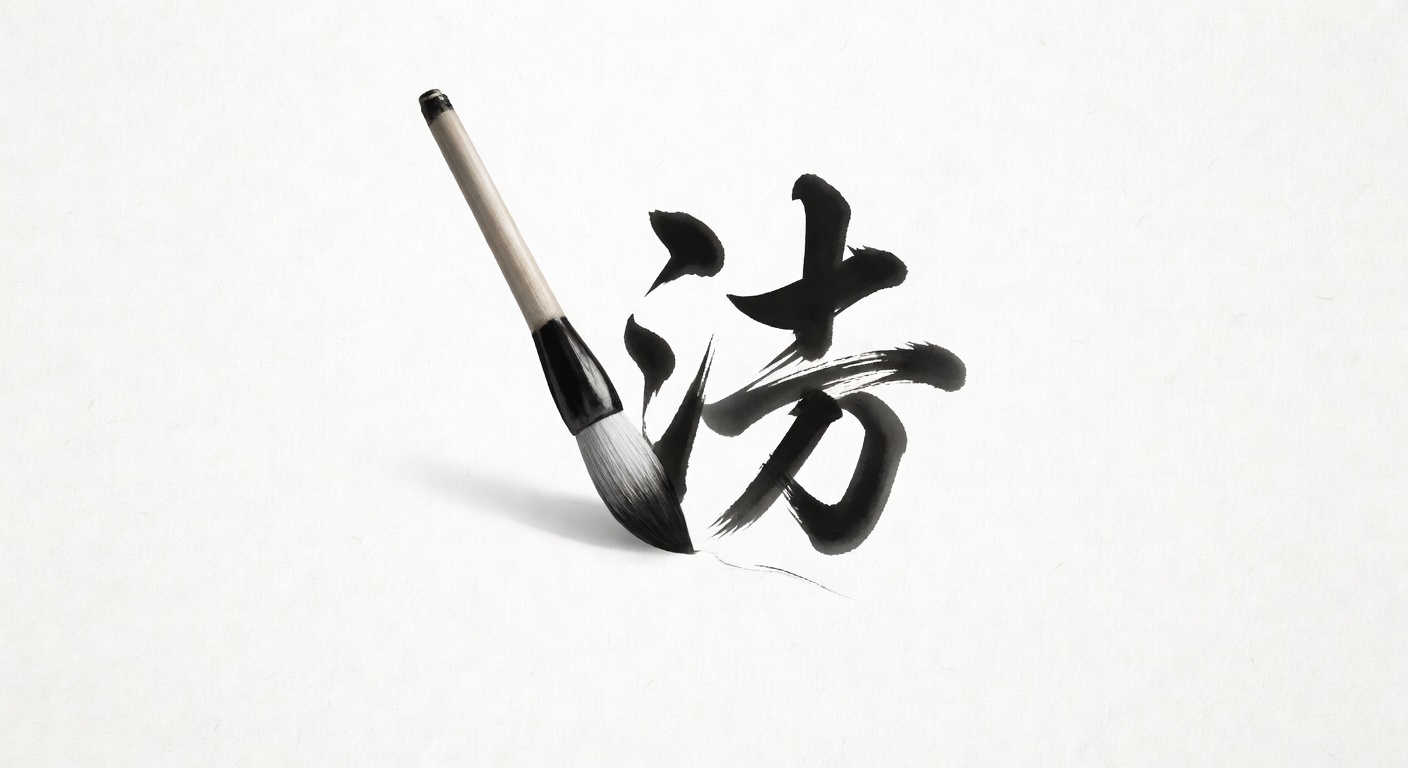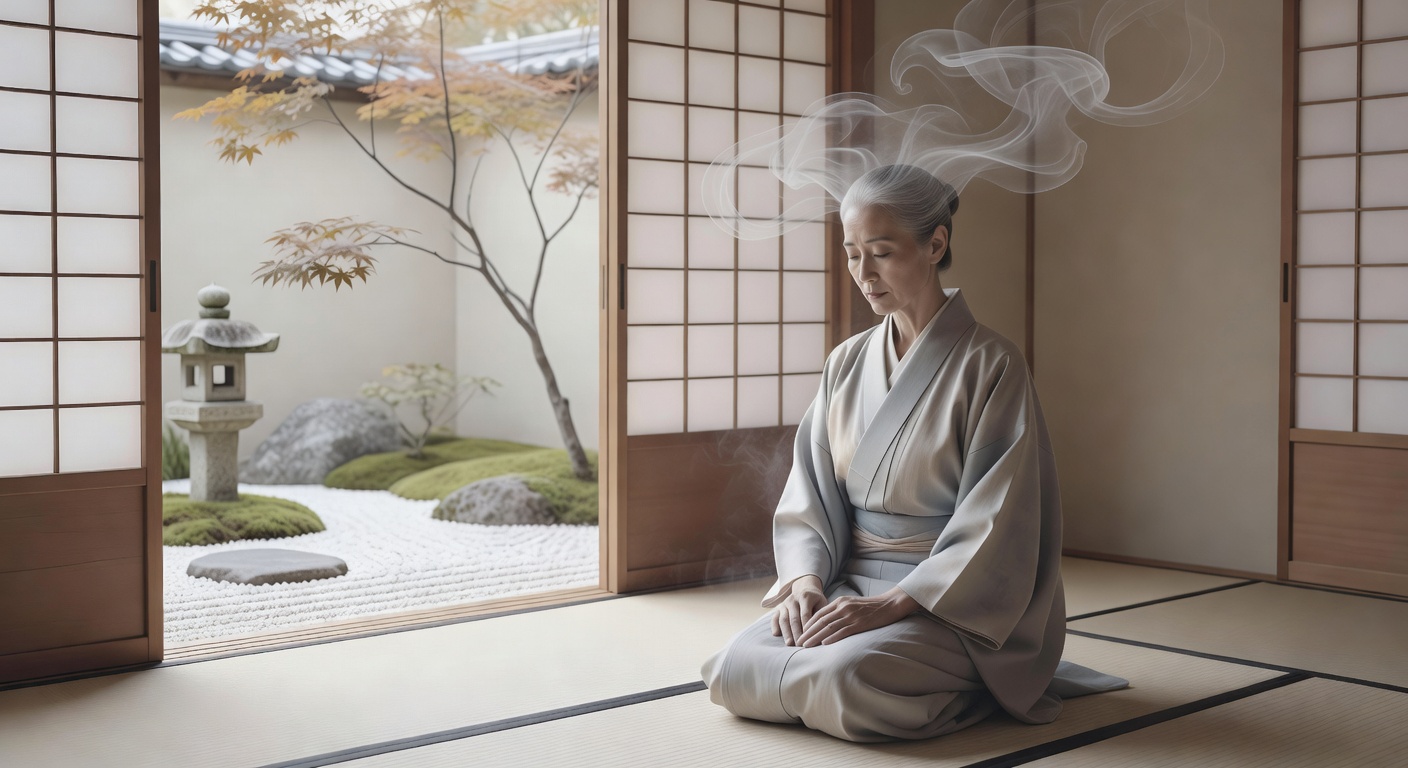
In Japanese thought, nature is not a backdrop to human life — it is its mirror. The concept of shizen (自然) asks us to consider what it might mean to exist without forcing, to understand without analysing, and to find clarity not through effort but through stillness.
There is a word in Japanese — ma (間) — that translates roughly as "negative space" or "pause." It describes the gap between notes in music, the empty room between walls in architecture, the silence between words in conversation. Ma is not absence. It is a kind of presence — a meaningful interval that allows everything around it to breathe.
Understanding ma is, in many ways, the beginning of understanding Japanese philosophy. Because Japanese thought, across its many traditions, returns again and again to the idea that meaning does not reside only in what is present, active, and visible — but also in what is withheld, suggested, and quietly there.
Shizen: Nature as Process
The word shizen is written with two characters: ji (自), meaning "self," and zen (然), meaning "so" or "thus." Together they describe something like "being as it is" — the natural state of a thing that has not been distorted by external intervention. Shizen is not wilderness. It is authenticity — the quality of existing according to one's own nature rather than performing a role assigned from outside.
The state of being as one is, without artifice or forced effort. In Zen and Taoist-influenced Japanese thought, shizen describes an alignment between inner nature and outward expression — the effortless grace of the plum blossom, the unselfconscious song of the bird.
This concept carries significant weight in Zen Buddhism, which entered Japan from China in the Kamakura period (1185–1333) and became one of the most influential intellectual and aesthetic forces in Japanese culture. Zen teaches that the thinking mind, with its relentless analysis and categorisation, can become a veil obscuring direct experience. Shizen points toward what remains when that veil is lifted.
Mono no Aware: The Pathos of Things
Closely related to shizen is the aesthetic concept of mono no aware (物の哀れ) — literally "the pathos of things," though it might better be translated as "the poignant impermanence of existence." The phrase was articulated by the 18th-century scholar Motoori Norinaga as the defining quality of Japanese literary and aesthetic sensibility.
Mono no aware is what you feel when petals fall, when the light changes at the end of an afternoon, when something beautiful passes — not grief, but a tender recognition of how precious things are precisely because they do not last.
— Adapted from Motoori Norinaga's Genji Monogatari Tama no Ogushi (1796)

The wave — in flux, yet always itself — is a fitting image for the Japanese philosophical understanding of change and permanence.
Wabi-sabi: Beauty in Imperfection
Perhaps no Japanese aesthetic concept has travelled as widely in the global imagination as wabi-sabi — and perhaps none is as frequently misunderstood. Often reduced to a design trend or a liking for rustic objects, wabi-sabi is in fact a profound philosophical orientation: an acceptance that all things are impermanent, incomplete, and imperfect — and that this is not a problem to be solved but a truth to be honoured.
Wabi originally described the melancholy loneliness of living apart from society — a kind of renunciation. Over time, it came to describe the austere beauty found in simplicity: a cracked tea bowl, a mossy stone wall, the asymmetrical branch of an aged pine. Sabi describes the beauty that comes with age and wear — the patina on old bronze, the weathering of untreated wood, the particular quality of autumn light.
The Japanese art of finding beauty in what is incomplete, impermanent, and imperfect. Rooted in Zen aesthetics, wabi-sabi is an antidote to the modern obsession with perfection and the new — a reminder that the most honest things are often the most worn.
Ikigai: A Reason to Rise
The concept of ikigai (生き甲斐) — often translated as "reason for being" — has become internationally recognised in recent years. Its Japanese meaning is somewhat broader than the popular diagrams suggest: not a fixed formula but a daily, embodied sense of purpose and meaning. The word is rooted in the verb ikiru (生きる), "to live," and gai (甲斐), "worth" or "result."
In Okinawa, where the concept is perhaps most deeply embedded in daily life and where longevity statistics are extraordinary, ikigai is not found in dramatic self-discovery but in small, consistent engagement: the morning ritual, the garden tended over decades, the conversation with a neighbour, the craft practised not for profit but for its own sake.
What unites all of these concepts — shizen, mono no aware, wabi-sabi, ikigai — is a fundamental orientation toward the world as it is, rather than as we might wish it to be. Japanese philosophy, at its most eloquent, is not escapist. It is deeply, quietly attentive to reality.